Pay Your Bill:

Having dentures may be a new experience, but that doesn’t mean you have to give up any of the foods or drinks you enjoy! Eating and drinking with dentures can be approached with some caution at first, but don’t worry! At Happy Harpeth Pediatric Dentistry + Orthodontics, we understand that the transition to dentures can be a big change for some patients, particularly when it comes to eating. In this blog, we will explain what to expect when eating and drinking with dentures, along with several tips to make it easier.
Understanding Your New Dentures
When you are newly fitted with dentures, you may feel a bit uneasy about eating with them for the first time. Dentures will likely feel very different than natural teeth, and the first thing that likely pops into your head is whether they will stay in place while you eat! With a little practice and the right method, you can make eating and drinking with your new dentures something enjoyable, just as it was with natural teeth.
What to Expect at First
Initially, eating with dentures can take some practice and patience. Your mouth will feel different from usual, and you’ll want to stick to softer foods as it adjusts to dentures. Some food items to consider for the first few days include scrambled eggs, mashed potatoes, and yogurt. You may find that your bite feels strange, and you might feel a bit of discomfort at first as your mouth adapts to the pressure exerted by the dentures on your gums. At Happy Harpeth Pediatric Dentistry + Orthodontics, our dentist Franklin, recommends eating soft foods for a few days to prevent an uncomfortable experience for your gums. If you are eating crunchy and hard foods, cut food into small, easy-to-manage pieces so chewing is not strenuous. Over time, you can begin to eat any food that you wish!
Tips for Eating and Drinking with Dentures
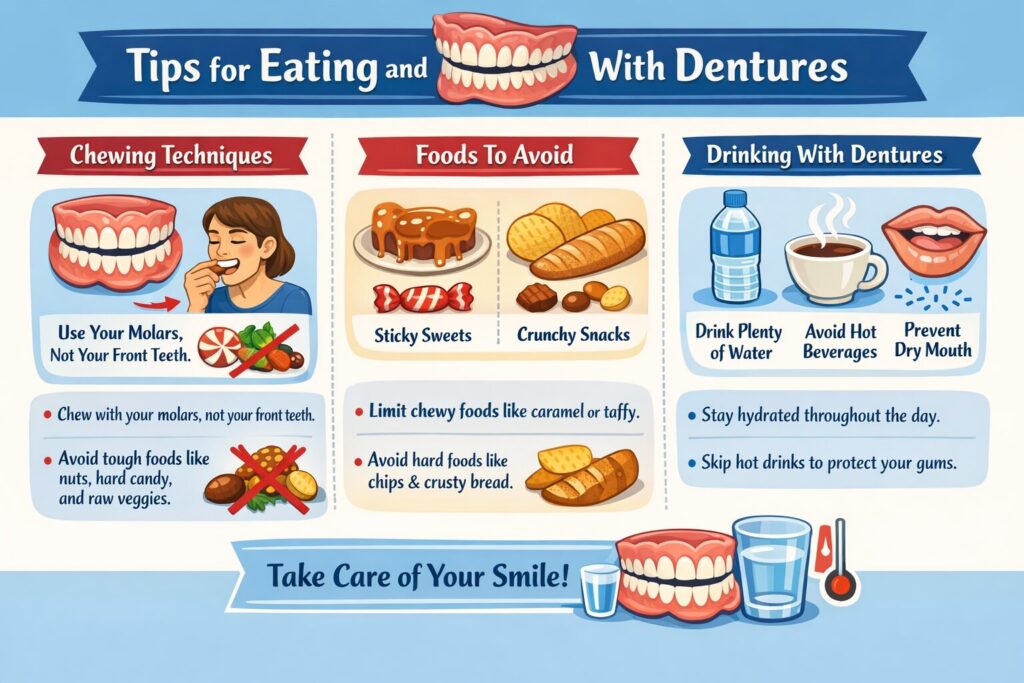
Chewing Techniques
When you begin to eat with your dentures, try to remember to always use your molars instead of biting directly with your front teeth. This will help keep your dentures in place so they do not shift in your mouth while you are eating. Chew slowly and do not attempt to bite into any tough foods, such as hard candy, raw vegetables, or nuts, as they could damage your dentures.
Foods To Avoid
Some foods will be easier to eat with dentures than others. Chewy foods, such as caramel or taffy, can make your dentures feel loose, and crunchy foods, such as chips or very hard breads, can be uncomfortable when eating with dentures. It is perfectly fine to have a bite of these foods now and then, but you should always try to minimize your intake.
Drinking With Dentures
It is generally easy to drink with dentures; there are a few guidelines to keep in mind. Try to maintain oral hydration by drinking water regularly. Dry mouth is very common when wearing dentures and is not necessarily caused by them. Avoid hot beverages such as coffee or tea immediately after wearing dentures, as the increased heat may further increase gum sensitivity during the transition period.
Finally, it is always good practice to avoid sugary drinks, such as soda and juice, which can contribute to plaque buildup and increase the risk of oral infections within a few days. Be sure to drink water after ingesting any sugary beverages!
Taking Care of Your Dentures to Enjoy Eating Again
You must keep your dentures clean to ensure that they remain effective and you can enjoy eating and drinking again. Taking proper care of your dentures will help remove stains, unwanted odors, and plaque buildup.
How to keep your dentures clean:
You should always clean your dentures every day. This can be done with a soft brush, denture cleaner (that is non-abrasive), and running your dentures under water to remove any food, bacteria, or plaque from their surface. After cleaning, you can leave your dentures in a solution overnight to keep them moist and prevent them from drying out and becoming distorted.
Check-up appointments with your dentist:
Even if your dentures appear to be fitting properly, it is vital to have regular check-up appointments with your dentist. Over time, your mouth changes shape, and your dentures can slip and cause damage. It is extremely important to have your dentures adjusted by your dentist in Franklin if you feel they are causing discomfort while eating, slipping, or damaging your mouth.
How do you adapt to eating with dentures over time:
Your adjustment will take some time, but with a little effort, it will soon become easy to eat with your dentures. You should start with very soft foods, such as yogurt, then move on to foods of normal consistency, like fruit, eggs, and vegetables, and finally to harder foods once you have a strong fit with your dentures. Also, avoid highly sticky or crunchy, hard foods, such as popcorn and nuts, to help preserve your dentures.
Experience Comfortable Eating with Your Dentures
At Happy Harpeth Pediatric Dentistry + Orthodontics, our dentist in Franklin believes that with the right care, eating with dentures can be just as enjoyable as eating with your natural teeth. Our team is here to help you every step of the way, from initial consultation to post-treatment support. If you’re looking for advice or assistance with your dentures, contact our office today to schedule an appointment.
Common Questions About Dentures
Can I eat normally with dentures?
It takes time, but with practice, you’ll be able to enjoy a wide variety of foods. Start with soft foods and gradually add harder ones.
Are there any foods I should avoid while wearing dentures?
Yes, sticky and hard foods can damage your dentures or cause them to shift. It’s best to avoid foods like caramel, taffy, and hard nuts.
How long will it take for me to get used to eating with dentures?
It can take a few weeks for your mouth to adjust. Start slow, and don’t be discouraged if it feels awkward at first.
Can I drink hot drinks with dentures?
It’s better to avoid hot drinks like coffee or tea immediately after getting dentures, as your mouth may be more sensitive.