Pay Your Bill:

As parents, we all want to see our children smile with confidence. But sometimes, that smile needs a little guidance early on. You may have heard that braces are for teenagers—but did you know some children benefit from orthodontic care much sooner?
Early orthodontic treatment, also called Phase 1 treatment, focuses on guiding jaw growth and correcting bite issues while your child is still growing. The big question is: How do you know if your child needs it?
If you’ve been searching for trusted Orthodontics Franklin families rely on, this guide will help you understand what to look for and when to act.
What Is Early Orthodontic Treatment?
Early orthodontic treatment typically begins between ages 7 and 10. At this stage, children still have a mix of baby and permanent teeth. This makes it an ideal time to identify and correct developing problems before they become more serious.
The goal isn’t always to put braces on right away. Instead, early treatment may:
- Guide jaw growth
- Create space for incoming permanent teeth
- Correct harmful oral hygrines
- Reduce the risk of trauma to protruding teeth
- Improve facial balance and symmetry
In many cases, early intervention can shorten or simplify future treatment during the teen years.
Why Age 7 Is an Important Milestone
The American Association of Orthodontists recommends that children have their first orthodontic evaluation by age 7.
Why so early?
By this age:
- The first permanent molars have erupted.
- Bite alignment can be evaluated.
- Jaw growth patterns become more visible.
- Potential crowding can be predicted.
Even if no treatment is needed, monitoring growth over time allows your orthodontist to step in at the right moment.
Signs Your Child May Need Early Treatment
Here are some common signs parents in Franklin should watch for:
Bite and Alignment Issues
- Crossbite (top teeth sit inside bottom teeth)
- Underbite or overbite
- Severe crowding
- Teeth that stick out
- Difficulty chewing or biting
Jaw and Growth Concerns
- Clicking or shifting jaw
- Facial asymmetry
- Mouth breathing
Habits That Affect Development
- Prolonged thumb sucking
- Tongue thrusting
- Speech difficulties related to tooth position
If your child attends school in the Williamson County area or plays sports at local parks like Pinkerton Park or Harlinsdale Farm, protecting their smile from early issues can also reduce the risk of injury to protruding teeth.
Source: Fishbein Orthodontics
When Early Treatment Is Truly Needed
Not every child requires early orthodontic care. In fact, many children benefit from simply being monitored until all permanent teeth come in.
Early treatment is typically recommended when:
- There is a significant jaw mismatch
- Severe crowding is evident
- A crossbite could affect jaw growth
- Protruding front teeth are at risk of injury
- Bite problems interfere with eating or speaking
A personalized evaluation helps determine whether your child needs treatment now—or later.
What Does Phase 1 Treatment Involve?
Every child’s treatment plan is unique, but early orthodontic care may include:
- Partial braces
- Palatal expanders
- Space maintainers
- Habit-correcting appliances
Treatment usually lasts 9 to 18 months, followed by a resting period while the remaining permanent teeth erupt.
Parents often appreciate that early treatment can reduce the need for extractions or complex procedures later on.
Benefits of Starting Early
1. Guides Jaw Growth
Correcting skeletal imbalances early can prevent the need for jaw surgery in the future.
2. Reduces Treatment Time Later
Many children who undergo Phase 1 treatment need less extensive care as teenagers.
3. Boosts Confidence
Children become more aware of their appearance as early as elementary school. Addressing visible issues early can improve self-esteem.
4. Improves Oral Health
Straighter teeth are easier to clean, reducing the risk of cavities and gum disease.
For families exploring Orthodontics Franklin options, early evaluation offers peace of mind—even if treatment isn’t immediately required.
What Happens If You Wait?
In some cases, waiting is perfectly fine. But when significant bite issues are ignored, they may:
- Worsen as your child grows
- Lead to uneven tooth wear
- Cause jaw discomfort
- Increase the risk of injury
- Require more complex treatment later
An early consultation doesn’t commit you to treatment—it simply gives you answers.
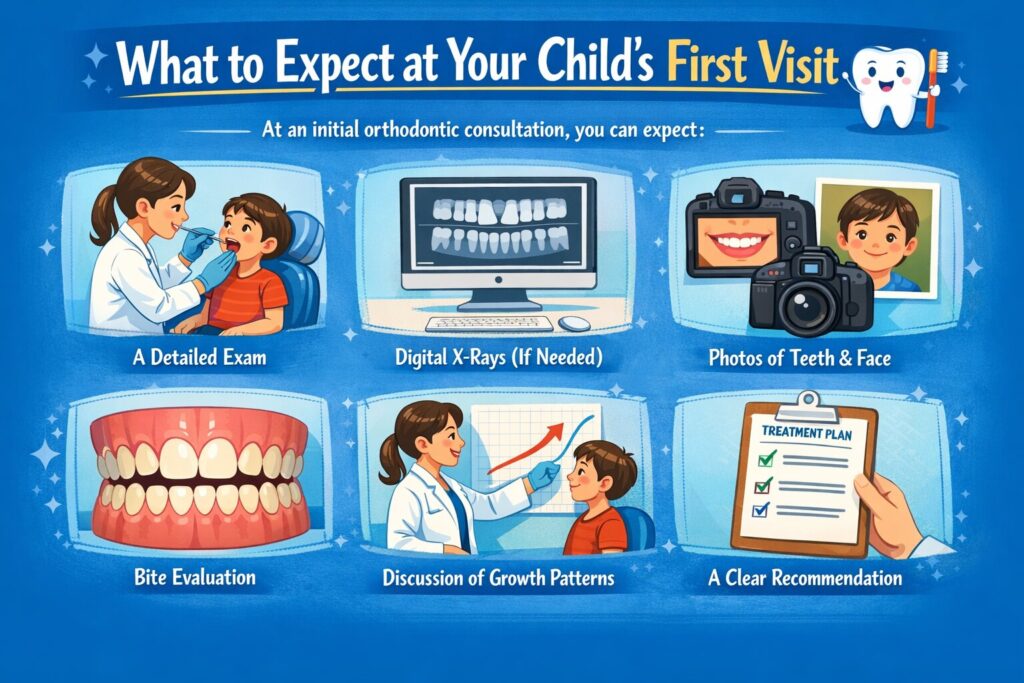
What to Expect at Your Child’s First Visit
At an initial orthodontic consultation, you can expect:
- A detailed exam
- Digital X-rays (if needed)
- Photos of the teeth and face
- Bite evaluation
- Discussion of growth patterns
- A clear recommendation
You’ll leave with a better understanding of your child’s smile development and the next steps.
For families living in Franklin neighborhoods like Westhaven, Fieldstone Farms, or Cool Springs, having access to convenient, local orthodontic care makes routine monitoring simple and stress-free.
Common Myths About Early Orthodontic Treatment
“Braces are only for teenagers.”
Not true. Some conditions are easier to fix while a child is still growing.
“If baby teeth are still present, it’s too early.”
Early mixed dentition is actually the best time to evaluate growth patterns.
“Early treatment means two full rounds of braces.”
Not necessarily. Some children require minimal Phase 2 treatment—or none at all.
How Parents Can Support Healthy Smile Development
You play an important role in your child’s orthodontic health.
- Encourage proper brushing and flossing
- Schedule regular dental checkups
- Address thumb sucking early
- Use mouthguards during sports
- Monitor bite changes as adult teeth come in
Being proactive can make a big difference.
Common Question
At what age should my child see an orthodontist?
Around age 7 is ideal for an initial evaluation, even if no treatment is needed.
Does early orthodontic treatment hurt?
Most children experience mild discomfort for a few days after adjustments, but appliances are designed to be comfortable and manageable.
Will insurance cover early treatment?
Many orthodontic insurance plans provide coverage for medically necessary early intervention. Your provider can help you understand your benefits.
How long does early treatment last?
Phase 1 treatment usually lasts 9–18 months, followed by a monitoring period.
Can early treatment prevent braces later?
It can reduce severity and complexity, but some children may still need Phase 2 treatment once all permanent teeth erupt.
A Healthy Smile Starts with the Right Timing
Every child grows differently. Some need early guidance. Others simply need observation. The key is knowing the difference.
If you’ve been considering an orthodontic evaluation and want trusted Orthodontics Franklin families depend on, early assessment gives you clarity and confidence.
At Happy Harpeth Smiles, we’re proud to serve families across Franklin and Williamson County with personalized, compassionate orthodontic care. We believe in educating parents, supporting children, and creating smiles that last a lifetime.
Ready to Take the Next Step?
Give your child a confident, healthy smile for life. Schedule an orthodontic evaluation with Happy Harpeth Smiles and get expert guidance tailored to their growth and needs. Book your appointment today!